
The Mistake Most People Make First
The door creeps down, stops a foot from the floor, and shoots back up. Naturally, the first thing most homeowners do is grab a ladder and start wiping down the little sensor eyes near the bottom of the track. It's tempting because every online forum says "clean your sensors" and because it feels like something you can fix in five minutes without calling anyone. Sometimes that's exactly the problem. But sensors are only one link in a chain, and if you spend twenty minutes polishing lenses while the real issue is a swollen door panel or a worn cable, you've lost time and the door still won't close.
A technician doesn't guess. They check things in a specific order, because each step rules something out before moving to the next. Here's that order, and what's actually happening at each stage.
What the Symptoms Are Telling You
Before any repair, it helps to separate what the door is actually doing:
- Closes partway, reverses, goes back up — almost always a sensor or force-setting issue, not a broken part.
- Won't move at all, opener hums or clicks — points to the opener's motor, gearing, or a jammed track.
- Closes fine most days, then suddenly won't — often weather-related: humidity swelling the door or moisture affecting electrical contacts.
- Door looks like it's fighting itself, jerking or shuddering — usually mechanical: rollers, cables, or spring tension.
Matching your symptom to the right starting point saves a lot of wasted effort.
1. Safety Sensor Alignment and Obstruction
This is the correct first check, just not the one people do carelessly. Both sensors sit a few inches off the ground on either side of the track, and they need to be pointed at each other in a perfectly straight line. A knocked bike, a stored cooler, a stack of lawn bags after a storm cleanup, any of it can nudge a bracket out of alignment. Check the small LED on each sensor: solid usually means good alignment, blinking means it's misaligned or blocked.
The fix is loosening the wing nut or screw on the bracket, gently adjusting until both lights go solid, then tightening it back down. While you're down there, check for spiderwebs or condensation film on the lenses, both common after humid nights and afternoon downpours.
2. Opener Force and Travel Limit Settings
If the sensors check out, the next suspect is the opener's internal settings, specifically the "close force" and "down limit." These tell the opener how much resistance to expect before it assumes it's hit an obstruction and reverses. Wood and wood-composite doors swell slightly in heavy humidity, adding just enough friction to trip that safety reversal, even though nothing is actually blocking the door.
This fix means opening the opener's control panel and adjusting the force or limit dial in small increments, testing after each change. Overcorrecting here is its own hazard, so this is one step worth being conservative about.
3. Track Obstructions and Debris
Next, a technician walks the full length of both tracks looking for anything physical in the way: a pebble kicked up during mowing, a bent section from a stray basketball, or buildup of grime where runoff collects near the base. Even a small dent in the track can cause the rollers to bind just enough to trigger a reversal.
The fix ranges from simply clearing debris to carefully hammering out a minor bend, or replacing a section of track if it's bent badly enough to keep catching.
4. Rollers and Cables
If the door is closing unevenly, scraping, or hesitating at the same spot every time, worn rollers or a fraying cable are likely. Humidity and salt air closer to the coast accelerate rust on steel rollers and cable strands, and a corroded cable can slip just enough on the drum to throw the door off balance, which the opener reads as resistance.
This is a hands-on repair: rollers get replaced in sets so wear stays even, and cables are replaced under controlled tension since they're under real load even with the door closed. Not a step to improvise.
5. Spring Tension
By this point, if the door still won't close properly, the springs are worth a look. Worn or unevenly tensioned springs make the door heavier than the opener expects, which again can trigger the force sensor to reverse the door, or stop it from moving at all. This is also the most dangerous component to work on without the right tools, since torsion springs store enough energy to cause serious injury.
6. Opener Motor or Circuit Board
Last on the list, because it's the least common cause: a failing motor or circuit board, sometimes from age, sometimes from a power surge during storm season. If everything mechanical checks out and the door still won't respond consistently, this is where the problem usually lives.
When to Call Precision Garage Door of Kissimmee
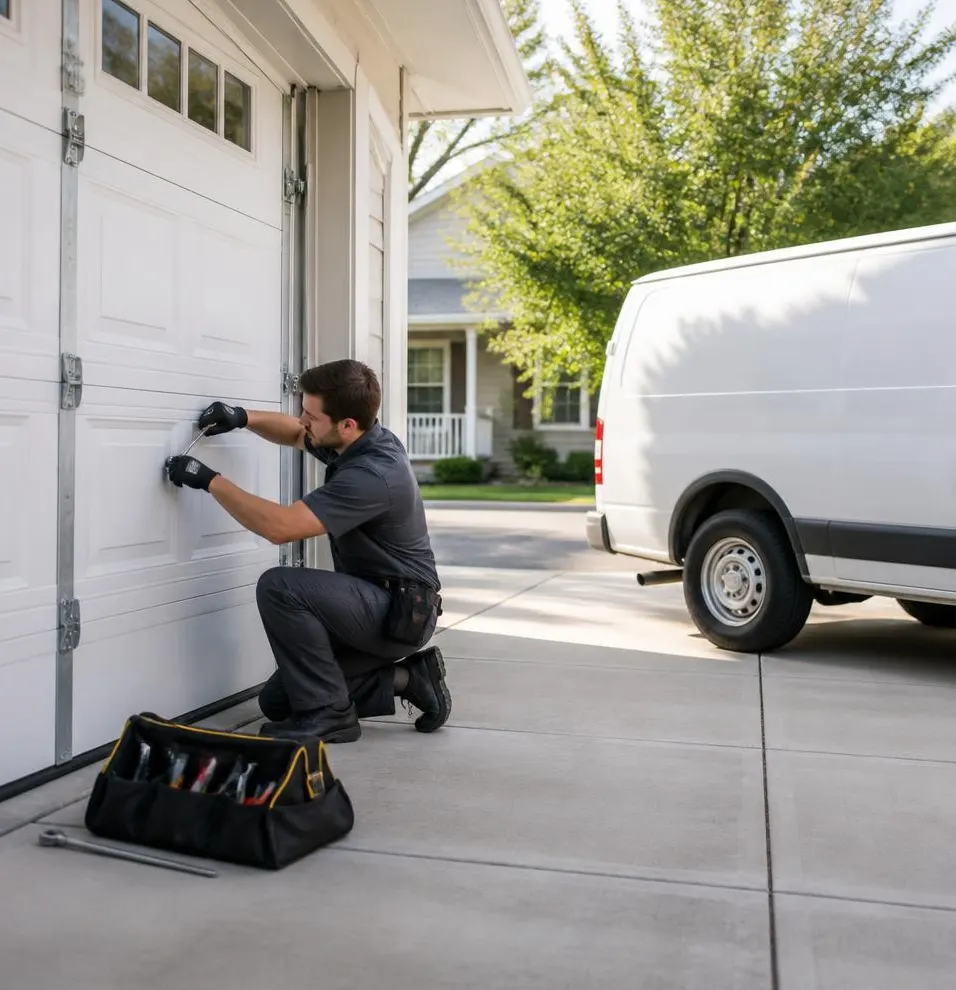
If you've checked the sensors and the door still won't close reliably, or if you're hearing grinding, seeing a bent track, or noticing the door hangs crooked, that's the point to stop troubleshooting and call. Our technicians carry out full diagnostics covering everything above, and most calls end up needing either Cable & Roller Replacement for worn components or Garage Door Spring Repair when tension is the root cause. Both are jobs that involve stored mechanical force and are safer and faster in experienced hands.
If your garage door in Kissimmee, FL won't close, stops short, or reverses on its own, call Precision Garage Door of Kissimmee and we'll have a technician out to find the real cause and fix it the same visit.