
The mistake most people make first is deciding the whole door is the problem. It's tempting — the paint is peeling, the panels look dated, and a full replacement feels like it would settle the argument once and for all. But if your garage door dates back to the 1990s or earlier, the real safety gap is usually hiding in one specific part: the opener. Openers built before federal auto-reverse safety sensor requirements went into effect don't have the pair of photo-eye sensors near the floor that stop the door from closing on a car bumper, a pet, or a kid's bike. That's the retrofit that actually matters first — not a brand-new door.
What Actually Needs to Change
Safety sensors on the opener
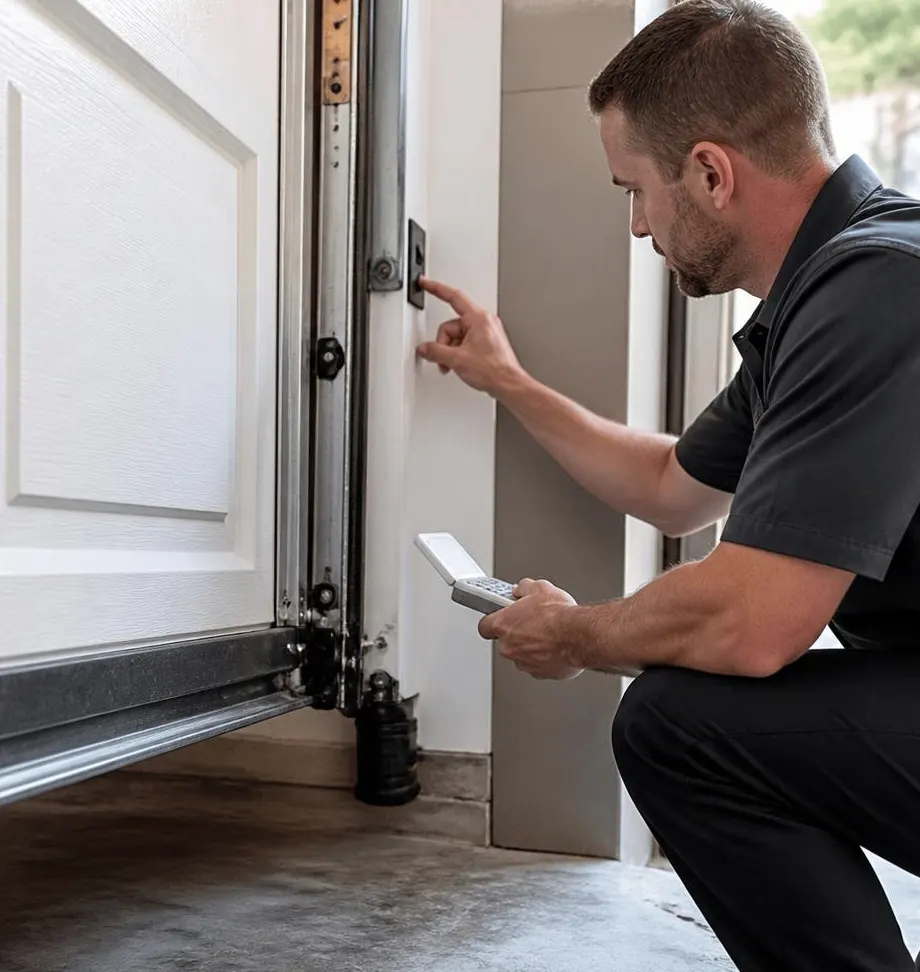
Look at the bottom of each track, about six inches off the floor. If you don't see two small boxes facing each other with a thin beam between them, your opener predates that safety standard. This is a straightforward opener swap, not a full door replacement, and it's the single most important upgrade on this list.
Spring containment
Older torsion springs were often installed without a safety cable running through the center. If a spring under tension breaks without that cable, it can whip loose with real force. If your springs don't have a cable threaded through them, that's worth fixing regardless of how well the door otherwise works.
Wind-load bracing
A door built decades ago was almost certainly not engineered for current wind-load expectations. You don't need to replace the whole door to address this — a horizontal bracing retrofit kit reinforces the panels against the kind of wind pressure that comes with hurricane season storms, without touching the look of the door.
Rust-prone hardware
Humidity and afternoon downpours are hard on anything metal that isn't galvanized. Original rollers, hinges, and cables from an old door often weren't rated for this kind of moisture exposure over 30 years. If you're seeing orange streaking on the tracks or stiff, grinding rollers, swap those parts out — it's cheap insurance against a cable snapping mid-cycle.
What You Can Leave Alone
- Wood or wood-composite panels that are still structurally sound. Cosmetic wear isn't a safety issue, and age alone isn't a reason to replace them.
- Original tracks, as long as they're straight, properly aligned, and not bent from a past impact.
- A manual or older-style opener motor that still runs smoothly, once the safety sensors have been added. The motor itself isn't usually the hazard.
- Non-insulated door sections, if the garage isn't conditioned space. Insulation retrofits are about comfort and energy cost, not safety, so this one is a preference call, not a must-fix.
The Trade-Off Nobody Mentions
Retrofitting piece by piece is almost always cheaper than full replacement, and it lets you fix the parts that are actually dangerous without touching the parts that still work fine. The trade-off is that an old door, even fully retrofitted, won't match the insulation value, wind rating, or finish options of a new one — and if the panels themselves are warped from years of humidity swelling the material, no amount of hardware retrofitting solves that. That's the honest line: safety components get retrofitted, structural failure gets replaced.
When to Call Precision Garage Door of Kissimmee
If you're not sure which category your door falls into, that's exactly what a Garage Door Maintenance & Tune-Up visit is for — a technician checks spring tension, cable condition, rust, and opener safety features in one visit and tells you plainly what's urgent versus what can wait. If the opener itself needs replacing to add modern auto-reverse sensors and battery backup for storm season power outages, our Garage Door Opener Installation service handles that without disturbing a door you're happy to keep. We show up on time, diagnose it fast, and only recommend replacing what actually needs replacing.
Settle the argument with facts, not guesses — call Precision Garage Door of Kissimmee, FL to get your door properly checked out.